01
Prepare the plant and soil ball
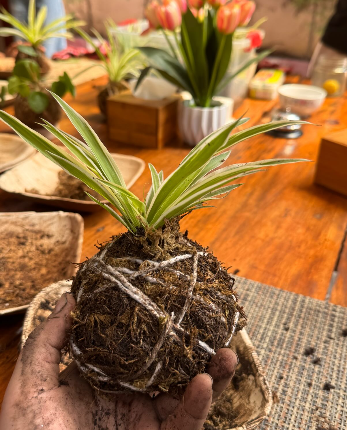
Gently remove the plant from its pot and shake off excess soil from the roots. Mix potting soil with wet hands until it holds together as a ball, sized for your plant and stand.
Growth 1
Product Detail
A hand-bound moss ball that carries a living plant without a pot, letting greenery sit, hang, or gather in ways ordinary planters never allow.
Product preview
Made from plants of your choice, potting soil, sphagnum moss, and biodegradable jute rope — with a manual book and reusable holder included.
What the craft solves
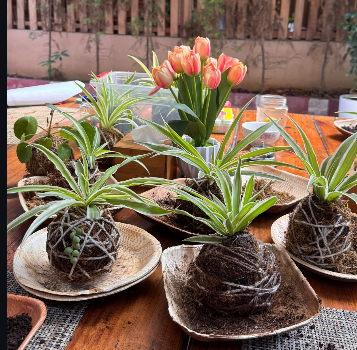
Kokedama works best when plant, moss, and placement are treated as one living object. Each ball starts from a plant of your choice, a soil core shaped by hand, a sphagnum moss wrap, and biodegradable jute rope — and comes with a manual book and reusable holder so caring for it stays simple.
The layout stays product-led: a strong hero, a compact spec lead, and a clear feature hierarchy.
Primary product view
The right side now holds a single image, so this row reads like a proper product showcase.
01
Watering by soak
02
Light and humidity
03
Feeding and temperature
Step by step: how a kokedama is made
01
Gently remove the plant from its pot and shake off excess soil from the roots. Mix potting soil with wet hands until it holds together as a ball, sized for your plant and stand.
02
Form the sphagnum moss into a wrap sheet matched to the size of your soil ball — in a tray or held in your hand, whichever feels natural.
03
Wrap the ball firmly with jute rope several times to secure everything, leaving extra string if you want to hang it. Then submerge the finished ball in water for 10–15 minutes and drain the excess.
Troubleshooting
The ending stays product-like and conclusive, with enough visual weight to feel intentional.
Start the conversationYellowing leaves point to overwatering or a lack of nutrients — adjust the watering rhythm and consider feeding. Dry moss means under-watering or low humidity; soak more often and mist regularly.
When the plant outgrows its ball, unwrap the string, add more soil, and reshape to accommodate the growth.
Root rot comes from too much water retention — let the ball dry out between waterings. If moss falls off, wrap the string tighter or add more moss to keep it intact.